Short answer
A let is a replayed rally, a stroke is a point for the player who was interfered with, and no let means the request is refused and the rally stands. What decides it is whether the opponent interfered, whether they tried to avoid the interference and whether you would have made a good return at all.
In squash two players share one box, and now and then one stands in the other's way. The rules have three words for it: let, stroke and no let. If you understand them, you play more calmly and argue less. This article is based on the World Squash (WSF) Rules 2025, mainly rules 8 and 9. For points and games, see squash rules.
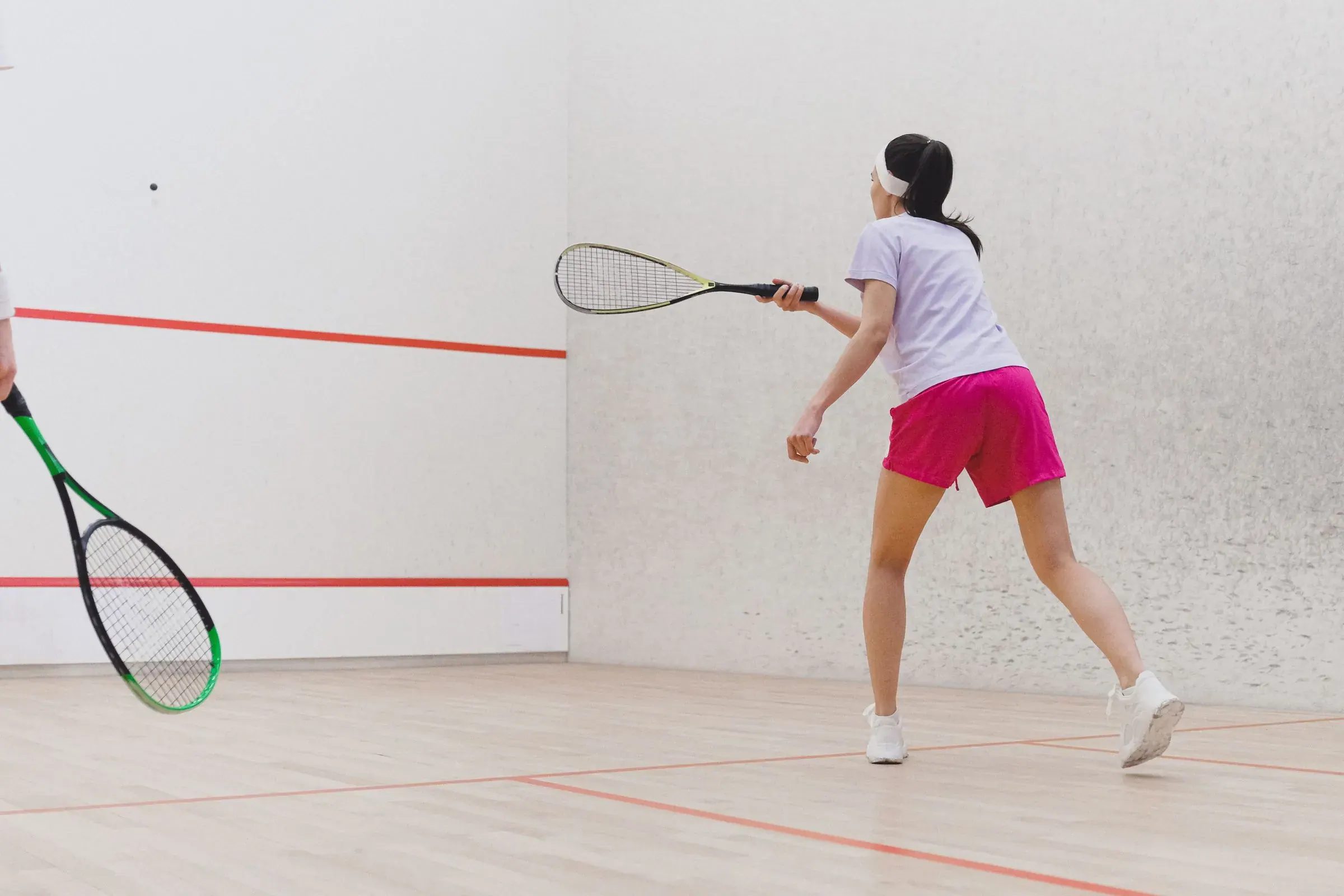
What interference is
After playing your shot you must clear the way for your opponent. Rule 8.1 says exactly what you owe them:
- a clear view of the ball,
- access to the ball,
- room for a reasonable swing,
- freedom to play the ball to any part of the front wall.
If you do not get one of these, it is interference. What happens next depends on the circumstances.
How to ask for a let
The player who was interfered with says, ideally, "Let, please" (rule 8.2). The request must come immediately, without undue delay. You do not need to ask specifically for a stroke; a request for a let covers it automatically. The referee then assesses the situation and decides: let, stroke or no let. The decision is final (rules 3.6 and 10.7).
The referee may also award a let or a stroke without a request, mainly where safety is concerned (rule 8.4).
Let, stroke or no let
Rule 8.6 is the heart of the matter. Put simply, run through three questions.
Was there any interference? If not, or if it was so minimal that it did not stop you seeing the ball and getting to it, it is no let (8.6.1, 8.6.4). It is also no let if you played through the interference, continued play and asked only afterwards (8.6.3).
Would you have made a good return? If your shot would have gone into the tin or out anyway, it is no let (8.6.2).
Did the opponent try to clear? If yes, it is a let and the rally is replayed (8.6.6). If not, it is a stroke and the point is yours (8.6.5). You also get a stroke if you would have hit a winning return from that position (8.6.7).
| Situation | Decision |
|---|---|
| No or minimal interference | No let |
| Interference, but the return would not have been good | No let |
| Interference, opponent tried to clear | Let |
| Interference, opponent did not try to clear | Stroke |
| Interference and the return would have been a winner | Stroke |
On a let nobody scores and the server serves again from the same box (rule 5.3). What the serve looks like and where the lines are is covered in Squash serve rules and court lines.
Hitting your opponent with the ball
If your ball hits your opponent on its way to the front wall, it is a stroke to you, provided it would have gone directly to the front wall as a good return, it was your first attempt and you had not turned (rules 9.1.1, 9.1.2). If you had turned, the stroke goes to your opponent, unless the opponent deliberately moved to intercept the ball. Then the stroke is yours (9.1.5).
Another case: the ball rebounds off the front wall and hits your opponent before you even attempt to play it. You win the rally, unless the contact was caused by your own position. If it was, it is a let (9.2.1).
Typical mistakes
- You play on and ask for a let only when it does not work out. A late request is no let (8.6.3).
- You play the ball, your opponent asks for a let only afterwards and the ball goes into the tin or out. The rally goes to the opponent, the one who asked (rule 8.5).
- You exaggerate your swing to force a stroke. If the exaggerated swing caused the interference, it is no let (8.10.1). If there was interference but you exaggerated the swing just to get a stroke, you get a let, not a stroke (8.10.2).
Did you know?
- The phrase "Let, please" is in the rules themselves (8.2).
- Turning has its own definition: a player turns so that they lose sight of the ball or the opponent, or the ball passes behind their body from one side to the other (8.13).
- The squash referee decides on the spot and the decision is final (3.6, 10.7).
- Squash is not the only sport that deals with obstruction. How tennis handles hindrance is in Lets, the net and touches in tennis.
Frequently asked questions
What is the difference between a let and a stroke in squash?
A let is a replayed rally; nobody scores. A stroke is a point for the player who was interfered with. No let means the referee refused the request and the result of the rally stands.
Do I have to ask for a let, or does the referee give it?
Normally you ask, with the words "Let, please", and straight away (8.2). But the referee may award a let or a stroke without a request, mainly for safety (8.4).
I hit my opponent with the ball. Who gets the point?
If the ball was going directly to the front wall as a good return, it was your first attempt and you had not turned, the stroke is yours (9.1.1, 9.1.2). If you had turned, the opponent gets the stroke, unless they deliberately moved into the path of the ball (9.1.5).
My opponent was in my way but was trying to clear. What do I get?
A let. If the opponent made every effort to avoid the interference, the rally is replayed (8.6.6). You get a stroke only if they made no effort, or if you would have hit a winning return (8.6.5, 8.6.7).
DOTTA keeps score for you and calls it out loud
Win the rally, click the remote on your racket. The app tracks points, games and ends, and announces the score to the whole court.