Short answer
In pickleball only the serving side can score, and it does so by winning a rally. Games usually go to 11 points, won by at least two. In doubles the score is called with three numbers, for example 0-0-2.
Pickleball is played with a paddle, and the scoring catches out every newcomer. You do not get a point for every rally you win, and in doubles the score comes as three numbers. Here is how it works, step by step, based on the 2026 USA Pickleball rulebook.
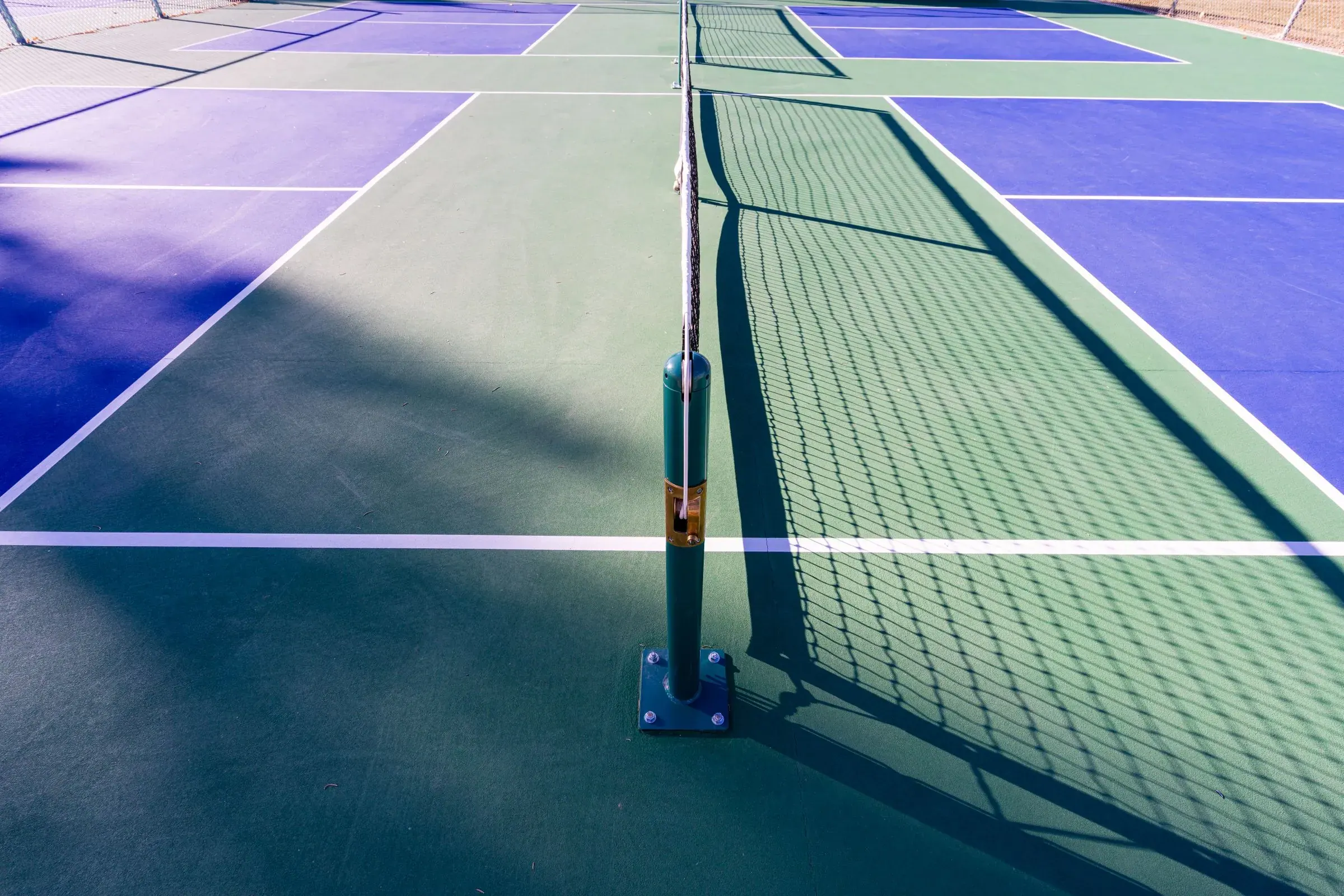
Points and the game: side-out scoring
The standard method is side-out scoring. Only the serving side can score, by winning the rally. If the receiving side wins the rally, it gets no point. It just gets the serve.
According to the introduction to the rules, a game is usually played to 11 points, won by at least two. Tournaments also use games to 15 or 21, and in tournament formats you always win by two. How a match is built depends on the format: a single game, best of three or best of five.
| Format | Game |
|---|---|
| Best of 3 | to 11, win by 2 |
| Best of 5 | to 11, win by 2 |
| Single game | to 15 or 21, win by 2 |
At 10-10 you keep playing until one side leads by two.
Calling the score: three numbers and 0-0-2
In doubles the score is called as three numbers: the serving side's score, the receiving side's score, and the server number (1 or 2). In singles two numbers do the job.
A doubles game starts at 0-0-2. The side that serves first has only one server to begin with, so its first lost rally means an immediate loss of serve (a side-out).
From there it goes like this:
- As long as the serving side keeps winning rallies, it keeps serving and the points add up.
- When the server loses a rally, the serve passes to their partner.
- When the second server loses too, the serve goes over to the opponents. After a side-out, the player on the right serves first.
Example: a call of "5-3-1" means the serving side leads 5-3 and its first server is serving.
Serving
- You serve diagonally, and the ball must clear the kitchen and land in the correct service court.
- You get one attempt. A fault ends your serve, and there is no second try.
- You may hit a volley serve or a drop serve, where you drop the ball and let it bounce.
- Once the score is called, you have 10 seconds to serve.
- A serve that clips the net and lands in the correct court is live. There is no let.
The kitchen and the two-bounce rule
The kitchen (officially the non-volley zone) is a strip 7 feet deep (about 2.1 m) on each side of the net. You may step into it whenever you like, but you must not volley from it, meaning hit the ball before it bounces. You also must not volley while your body, your paddle or anything you are wearing touches the kitchen, and that includes momentum carrying you in after the shot. The kitchen lines are part of the kitchen. A ball that bounces in the kitchen can be played from inside it.
The two-bounce rule says the serve and the return of serve must each bounce before anyone volleys.
Changing ends
In single-game tournament matches and in deciding games, you change ends when the first side reaches 6 points (game to 11), 8 points (to 15) or 11 points (to 21).
Disputed situations
- Ball on the line. A ball on any line is good, except the kitchen line on a serve. The defending player calls the ball out, and does so straight away. If in doubt, the ball is in: an out call has to be clear ("clearly out").
- Serve into the kitchen. A serve that lands in the kitchen, including its line, is a fault by the server and the serve ends.
- The ball hits a player. If the ball hits a player or anything they are wearing (apart from the paddle and the hand holding it below the wrist), it is a fault on the player who was hit, and their side loses the rally.
- Touching the net. Touching the net or its structure during play is a fault on whoever touched it. Hitting the ball before it has fully crossed the plane of the net is a fault too.
- Double hit. A double hit by one player is fine as long as the motion is continuous and in one direction.
Curious how other sports count? See the rules of tennis or the rules of padel. The full text is in the official USA Pickleball rulebook.
Frequently asked questions
Can the receiving team score in pickleball?
No. In standard (side-out) scoring only the serving side scores. By winning a rally, the receiving side only wins the serve.
What does 0-0-2 mean in pickleball?
It is the start of a doubles game. The first two numbers are the score, the third is the server number. The starting side serves as the "second" server, so its first lost rally is an immediate loss of serve.
How many points is a game of pickleball?
Usually 11, won by at least two. Tournaments also use games to 15 or 21.
Does the kitchen line count as the kitchen?
Yes. The line bounding the kitchen is part of it. Step on it while volleying and it is a fault. A serve that lands on it is a fault too.
Is it a let if a serve clips the net in pickleball?
No. If the ball clips the net and lands in the correct court, it is live.
DOTTA keeps score for you and calls it out loud
Win the rally, click the remote on your racket. The app tracks points, games and ends, and announces the score to the whole court.