The Kitchen in Pickleball: What You Can and Cannot Do in the Non-Volley Zone
Short answer
The kitchen (non-volley zone) is the 2.13 m (7 ft) strip by the net on both sides. You can stand in it at any time, but you may not volley from it or from its line. It is also a fault if momentum carries you into it after a volley.
The kitchen is the zone by the net where you may not volley. But you can commit a fault in it even once the ball is already dead. Here is Rule 11 taken apart in detail per the official USA Pickleball 2026 rulebook. For the basics of scoring, see pickleball rules.
What the kitchen is and exactly where it ends
Officially it is called the non-volley zone, and everyone calls it the kitchen. Under rule 3.A.4.c it is a rectangle of 2.13 × 6.10 m (7 × 20 ft) by the net, one on each side. An important detail: the kitchen lines are part of the kitchen. If your toe is on the line, you are standing in the kitchen.
Rule 3.A.4.c adds one more thing that is often forgotten. The kitchen is two-dimensional: it is only the area on the ground and does not extend up into the air. So what matters is what you are touching, not what your paddle or hand is above.
What you may do in the kitchen
This surprises a lot of newcomers: under rule 11.A you may stand in the kitchen at any time. You do not have to run out of it and you need not fear stepping in. The only thing you may not do from it is volley, that is hit the ball before it has bounced. Every volley must start outside the kitchen.
A ball that has bounced in the kitchen you can happily play from inside. It has bounced, so it is not a volley and the kitchen does not restrict you at all.
What is a fault
Rule 11.A has three sub-points, and each of them can cost you the rally.
- 11.A.1: it is a fault if the player hitting a volley, or anything in contact with them (including a partner), touches the kitchen.
- 11.A.2: it is a fault if, after a volley, momentum carries you into the kitchen or into anything touching it (again, including a partner). And that applies even if the ball is already dead.
- 11.A.3: once you have touched the kitchen, you must have both feet completely outside the zone before your next volley.
Momentum is the most treacherous. You hit a lovely volley, the ball lands, your opponent cannot get it and you take a half step and touch the line with your toe. Rally yours? It is not. Under rule 9.B.1 a kitchen fault is the only fault that can be committed even when the ball is dead. Precisely because of momentum.
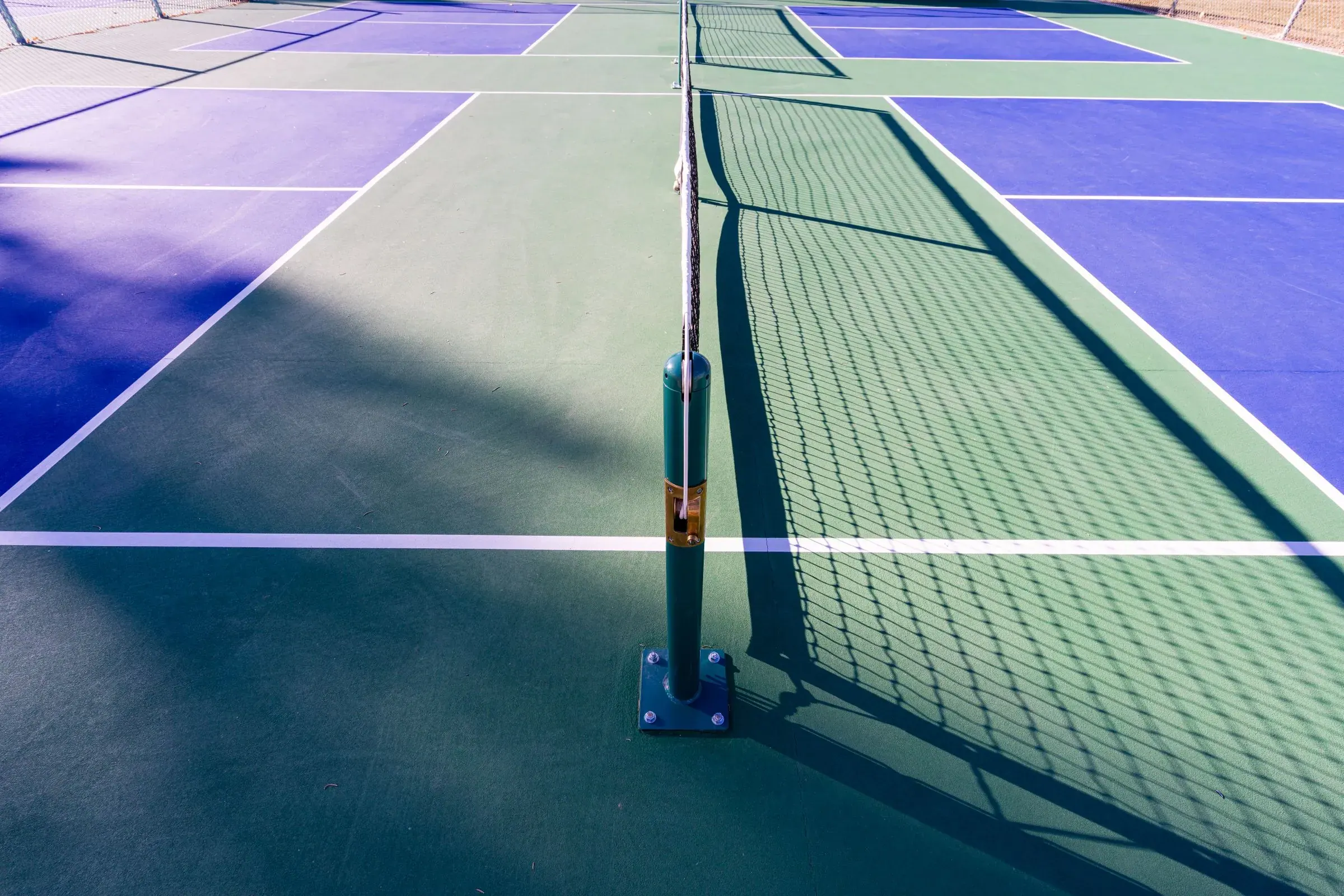
Typical situations at the net
- Volley and landing on the line. You hit a volley out of the air, finish the swing and land with one foot on the kitchen line. Fault (11.A.2).
- Volley in the air above the kitchen. You stand with both feet behind the line and lean with your paddle far over the kitchen. Fine, the zone does not extend upwards (3.A.4.c).
- Your partner steadies you. You stand in the kitchen and grab your partner's arm as they hit a volley, so they do not topple over. Fault for them; they are touching something that is in the kitchen (11.A.1).
- Step in and back out. You stepped into the kitchen for a low ball after the bounce. Before you play your next volley, both feet must be completely out. One foot out and the other in the air is not enough (11.A.3).
Who calls the fault
Under rule 9.B.3, kitchen faults together with service foot faults are the only faults you may call on your opponent. Other faults are the responsibility of whoever committed them. So if you see your opponent on the kitchen line during a volley, you can say so out loud and the rally is yours. If the teams disagree, the rally is replayed (9.B.3.b).
The serve and the kitchen
On the serve the kitchen has one more special rule. Under 7.E.2 a serve that lands in the kitchen is a fault, and under rule 8.C a serve that lands on the kitchen line is out. That is the exception: otherwise in pickleball a ball on the line is good. In the rally after the serve the kitchen line works like any other line. More detail in the pickleball serve.
Did you know?
- The kitchen is expressly two-dimensional under the rules. The air above it is not part of it (3.A.4.c).
- You can stand in the kitchen for the whole match. Only the volley is forbidden (11.A).
- Your opponent can call the momentum fault on you even after the ball is dead (11.A.2, 9.B.1).
- A serve on the kitchen line is out (8.C), whereas for every other ball you call "out" only when you can clearly see space between the line and the ball (8.E).
The two-bounce rule, which is closely tied to the kitchen, is covered in the two-bounce rule in pickleball.
Frequently asked questions
Can I step into the kitchen when the ball is not coming there?
Yes. Rule 11.A only forbids the volley. You can stand in the kitchen at any time, for example while waiting for a ball that will bounce.
What if I stand behind the line and fall into the kitchen only after the hit?
It is a fault under rule 11.A.2. Momentum after a volley counts, even when the ball is no longer in play.
Is the line part of the kitchen?
Yes. Under rule 3.A.4.c the lines are part of the zone. A foot on the line during a volley is a fault.
Can my opponent call a kitchen fault on me?
Yes. Under rule 9.B.3, kitchen faults and service foot faults are the only faults that are called on the opponent.
Can I play a ball that has bounced in the kitchen from inside it?
Yes. After the bounce it is no longer a volley, so the kitchen plays no part.
DOTTA keeps score for you and calls it out loud
Win the rally, click the remote on your racket. The app tracks points, games and ends, and announces the score to the whole court.