Short answer
In badminton you serve diagonally from the right service court when the server's score is even and from the left when it is odd. At the moment of the hit the whole shuttle must be below 1.15 m, both feet on the floor, and there is only one serve. The winner of the rally scores, and whoever scores serves next.
The serve is the one shot in badminton where the Laws watch you from your feet to the height of your racket. Most disputes start right here: where to serve from, whose turn it is in doubles and whether the shuttle was too high. This article goes into the detail of Laws 9 to 12. For the basics of scoring, see badminton rules.
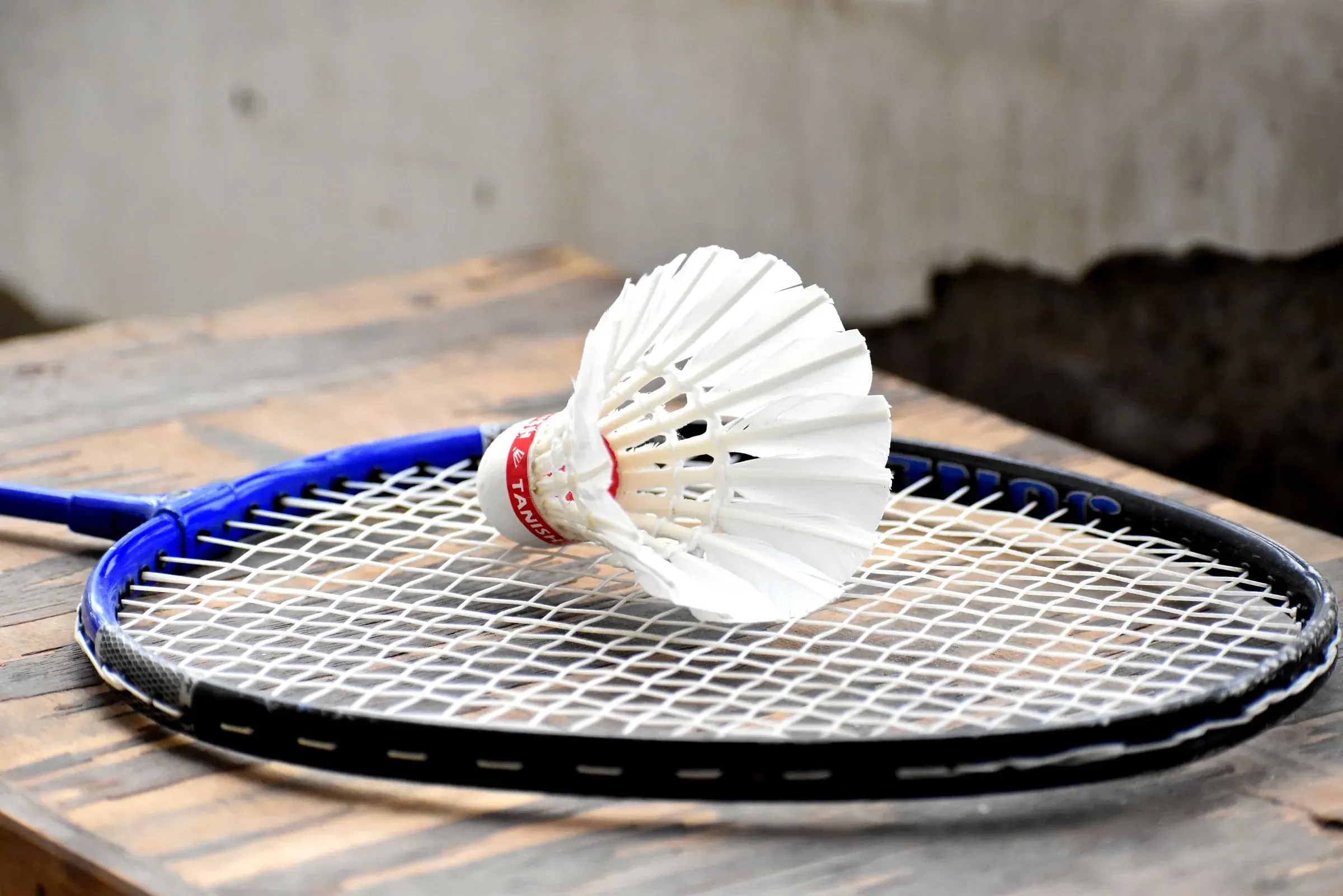
What a correct serve looks like
Law 9.1 describes the serve step by step. If you miss any of the points, it is a fault and you lose the rally. There is no second attempt in badminton.
- The server and receiver stand in diagonally opposite service courts and must not touch their lines (9.1.3).
- Both feet of both players stay in contact with the floor, stationary, from the start of the serve until the hit (9.1.4).
- You release the shuttle from the hand without spin and the racket must first hit its base (9.1.5).
- At the moment of the hit the whole shuttle is below 1.15 m above the surface of the court (9.1.6).
- The racket moves continuously forwards from the start of the serve (9.1.7). The start of the serve is the first forward movement of the racket head (9.2).
- If you attempt to serve and miss the shuttle, the serve counts and it is a fault (9.1.8, 9.3, 13.1).
- You may not serve before the opponent is ready. But if they attempt to return the shuttle, they are considered ready (9.4).
The shuttle must travel upwards from the racket over the net and land in the opponent's service court on or inside the lines (9.1). The line is part of the court it defines (1.3). A shuttle on the line is in.
In doubles the partners of the server and the receiver may stand anywhere on their own side of the net. They just must not block the opponent's view of the serve (9.5).
Where you serve from: even and odd scores
The server's score decides.
- You have 0 or an even number of points: you serve from the right service court.
- You have an odd number of points: you serve from the left service court.
In singles (Law 10) two more things apply. If you win the rally as the server, you score a point and serve again, this time from the other service court (10.3.1). If the receiver wins the rally, they score a point and take over the serve (10.3.2).
Once the serve has been returned, the service courts stop mattering. From then on each player may play from anywhere on their own side of the net (10.2, 11.2).
Doubles: who serves and who receives
In doubles (Law 11) the side with an even score serves from the right service court and with an odd score from the left (11.1.1, 11.1.2). The receiver is always the player standing diagonally opposite the server (11.1.4).
The serving sequence within a game looks like this (11.4):
- The first server starts from the right service court.
- Then the partner of the first receiver serves.
- Then the partner of the first server.
- Then the first receiver.
- Then the first server again, and so on.
Plus three principles that hold it all together:
- You change service courts only when you win a point and your side is serving (11.1.5). Otherwise you stay where you are.
- The player on the receiving side who served last stays in their service court. Their partner stands in the other one (11.1.3).
- Nobody may serve or receive out of turn, and nobody receives two consecutive serves in the same game (11.5).
Whoever wins a game serves first in the next one (7.6). It can be either player of the winning side, and either player of the losing side may receive (11.6).
If you get the court or the order wrong
Law 12 is merciful: a service court error or a wrong order is corrected as soon as the shuttle is not in play, and the score reached stands (12.1, 12.2). Nothing is replayed and nobody gets a point for it.
Faults and lets on the serve
Beyond the points in Law 9.1, it is a service fault when the shuttle is caught on the top of the net, gets stuck in the net after passing over, or in doubles is hit by the receiver's partner (13.2.1 to 13.2.3). A shuttle that merely brushes the net and lands in the correct service court is fine.
A let, meaning the serve is replayed, occurs when you serve before the opponent is ready (14.2.1), or when both players fault on the serve at the same time (14.2.2). After a let, the player who served last serves again (14.3). All faults and lets in play are covered in faults and lets in badminton.
Did you know?
- The 1.15 m limit has been compulsory at top-level tournaments since December 2018 (note to Law 9). It is a fixed height, the same for every player.
- Unnecessarily delaying the serve once the racket has been taken back is "undue delay" and counts as a fault (9.1.2).
- A toss is held before the match. The winner chooses either to serve or receive, or an end of the court; the loser gets what is left (6.1, 6.2).
- The court rules are in the article on badminton court dimensions, including why the doubles service court is 76 cm shorter.
Frequently asked questions
Which service court do you serve from at 0?
The right one. Zero counts as an even number, so every game starts with a serve from the right service court (10.1.1, 11.1.1).
Is a serve on the line good?
Yes. The lines form part of the court they define (1.3), and the serve must land on or inside the line (9.1).
Do I get a second serve in singles?
No. Badminton has only one serve. A faulty serve means a point for the opponent, and even a missed shuttle counts as a serve (9.1.8).
What if the wrong player serves in doubles?
As soon as you notice and the shuttle is not in play, you correct the error. The score stays as it is (12.1, 12.2).
Does the serve change from 2027?
The 1.15 m height does not change in the Laws. What changes is the scoring: from 4 January 2027 games are played to 15 points. The details are in the article on the 3x15 format.
DOTTA keeps score for you and calls it out loud
Win the rally, click the remote on your racket. The app tracks points, games and ends, and announces the score to the whole court.